
The Future of PFAS Regulations: How 2025 Will Reshape Global Supply Chains
Per- and polyfluoroalkyl substances (PFAS), widely known as “forever chemicals,” are synthetic compounds valued for their resistance to heat, water, and oil. While they have been used extensively across industries, their extreme persistence in the environment and strong links to health risks such as cancer, hormonal disruption, and immune system damage have raised global concern. In response, 2025 marks a significant turning point, with both the European Union (EU) and the United States (US) advancing landmark PFAS regulations. These measures aim to reduce human exposure, protect the environment, and increase corporate accountability across industries. Until recently, PFAS oversight was inconsistent, fragmented, and inadequate. This led to: These gaps in regulation triggered urgent action from governments, creating a pressing compliance requirement for manufacturers, importers, and suppliers worldwide. In response, the EU and US have introduced stricter PFAS measures between 2024–2025. These include bans, reporting requirements, stricter monitoring, and cleanup responsibilities. Together, these regulations aim to protect human health, restore contaminated environments, and enforce transparency throughout the supply chain. European Union (EU) United States (US) Impact: These rules represent a turning point in chemical governance, pushing industries to adapt product design, strengthen supply chain disclosures, and adopt proactive risk management. Companies that fail to comply face fines, recalls, liability, and loss of market access. As PFAS regulations tighten across the EU and US, businesses face mounting pressure to adapt product designs, strengthen supply chain oversight, and comply with complex reporting requirements. Staying compliant is not only critical to maintaining market access but also essential for protecting brand reputation and mitigating long-term liability. ComplianceXL supports organizations in this transition by offering end-to-end PFAS compliance solutions—from material screening and regulatory mapping to supplier audits, documentation, and post-market surveillance. With our expertise, companies can confidently navigate evolving regulations, reduce risks, and demonstrate their commitment to environmental responsibility while building long-term business resilience. FAQs: 1.Why are PFAS regulations important? They protect human health and the environment by restricting substances that are persistent, bioaccumulative, and highly toxic. 2.What are the penalties for non-compliance? Penalties may include fines, product recalls, and long-term liability, particularly under CERCLA in the US and REACH in the EU. 3.How do PFAS rules affect product design and sourcing? Manufacturers must rethink formulations, materials, and supplier disclosures to ensure compliance and avoid costly redesigns or disruptions. 4.Are PFAS restrictions harmonized internationally? Not yet. Regulations differ across the EU, US federal agencies, and US states, making localized compliance strategies essential.
Europe’s Plan to Ban PFAS: What It Means for Industry and Consumers
PFAS, or per- and polyfluoroalkyl substances, are referred to as “forever chemicals,” and the European Union is working to eradicate them from everyday life. Known for their ability to withstand heat, oil, and water, these materials have found extensive application in everything from firefighting foam to cookware. However, because of their environmental durability and connections to health issues, they are a significant regulatory concern. A global ban on all PFAS one of the most comprehensive chemical bans ever proposed—is at the center of the EU’s action. In 2023, Germany, the Netherlands, Denmark, Sweden, and Norway together submitted a restriction proposal under the EU’s REACH legislation. The European Chemicals Agency (ECHA) has been examining its socioeconomic and scientific ramifications ever since. ECHA’s Socio-Economic Analysis Committee (SEAC) and Risk Assessment Committee (RAC) are still conducting assessments as of mid-2025. By the end of the year, their final conclusion is anticipated, which could lead to a restriction on more than 10,000 PFAS compounds across the continent. What Would Be Covered by the Ban The plan would limit PFAS production, use, and distribution within the European Union. PFAS-containing goods include: Even certain industrial applications might be phased out unless they are shown to be very necessary and have no other options. To encourage innovation and replacement, certain industries such as semiconductors, medical devices, and transportation may be granted temporary exemptions. An Emphasis on Safety for Consumers Environment Ministers of the EU pay particular attention to goods that are marketed to consumers. These are the first targets for restriction since safer alternatives are currently available. European authorities say that while addressing PFAS in ordinary products is a more immediate win, key technology usage will be handled gradually. However, environmentalists caution that leaving out industrial PFAS waste and emissions could result in significant regulatory gaps. TFA – An Unspoken Danger Trifluoroacetic acid (TFA), a PFAS breakdown product that is now present in drinking water, rain, and even breast milk, is a crucial issue that is becoming more urgent. Under its chemicals laws, the EU is determining if TFA qualifies as a reproductive toxin. Stricter oversight and restrictions may shortly be implemented if approved. Worldwide Momentum The EU’s plan on PFAS aligns with mounting international pressure. The momentum toward global prohibitions was strengthened in May 2025, when long-chain PFAS also known as PFCAs were formally added to the Stockholm Convention’s global ban list. However, detractors claim that PFAS manufacturers are using forceful lobbying techniques to stall or erode legislation, emulating previous practices used by the fossil fuel and tobacco sectors. What Comes Next? The EU’s decision to outlaw PFAS represents a significant change in the way chemicals are governed. The overall objective is clear: safeguard the environment and public health against persistent, dangerous compounds. Although there are still obstacles to overcome particularly for sectors that depend on PFAS the EU is establishing a global standard for chemical safety in the twenty-first century, with the help of scientists, non-governmental organizations, and individuals.
PFAS Compliance Guide for Consumer Product Manufacturers
PFAS, also known as “forever chemicals,” are man-made substances that persist in the environment. They are used in many products, including clothing, cosmetics, electronics, and food packaging. Over time, these chemicals accumulate and may harm both human health and the environment. The EPA and individual U.S. states are taking proactive regulatory actions to reduce the use of PFAS in consumer products. Each U.S. state is developing its own laws to control PFAS in consumer products. Some states are limiting PFAS use, while others are banning it entirely. For example, the state of Maine will prohibit the use of intentionally added PFAS in new products, effective January 1, 2030. California prohibits PFAS in food packaging, juvenile products, and textiles. Washington bans PFAS in firefighting foam, food packaging, and other consumer goods. New York and Vermont have banned PFAS in food packaging materials. States like Maryland and Nevada have restricted PFAS in children’s items such as car seats and toys. As PFAS regulations continue to evolve and vary from state to state, manufacturers are facing increasing challenges. These include understanding regulatory requirements across different jurisdictions, identifying and assessing the presence of PFAS in their products, and developing strategies to keep up with new regulations. Some states require manufacturers to disclose the presence of PFAS in their products, promoting transparency and consumer awareness. Ensuring compliance with varying state-level regulations can be complex for companies. ComplianceXL helps businesses develop smart strategies to comply with PFAS regulations. Our services include product analysis to detect PFAS, supply chain communication strategies, regulatory training for upcoming restrictions, and compliance consultation. We also provide ongoing updates on new regulatory developments as part of our compliance data management services to help companies remain compliant. FAQs: 1. What products are affected by PFAS regulations? Commonly regulated products include food packaging, firefighting foam, textiles, cookware, cosmetics, and children’s products. 2. What are the challenges in regulating PFAS? The vast number of PFAS compounds and their widespread use make regulation complex. Additionally, finding safer alternatives for certain applications remains an ongoing challenge.
Exploring the Amplified Environmental Threat of PFAS and Microplastics
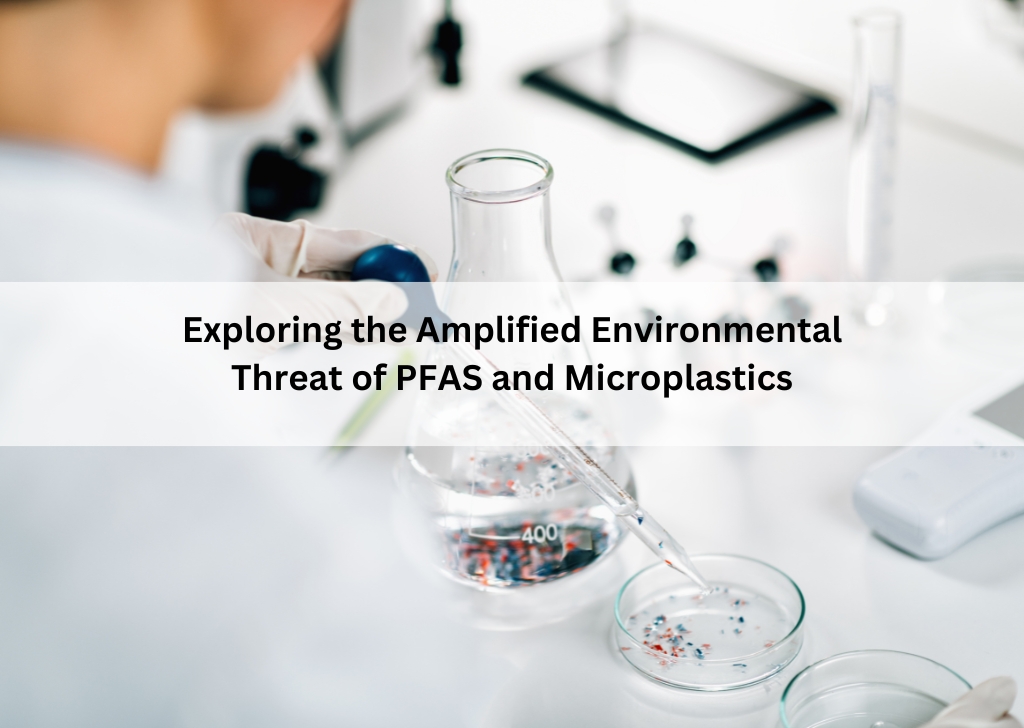
Recently, the world has been paying attention to two specific groups of environmental contaminants—PFAS (Per- and Polyfluoroalkyl Substances) and microplastics. Both are known for their detrimental effects on the environment, their global distribution, and their potential for bioaccumulation or biomagnification. However, new findings suggest a worrying synergy: when these contaminants come into contact, the effects may worsen, adding an additional dimension of threats to the environment and human health. PFAS and microplastics, known as “forever chemicals,” persist in the environment, accumulating and posing risks to wildlife and humans. They can travel long distances through water systems, reaching even the Arctic. PFAS are synthetic chemicals found in a wide variety of industries and applications, including non-stick cookware and fire extinguishing foam. Often referred to as “forever chemicals,” PFAS are not biodegradable in the environment and accumulate in living organisms over time. Microplastics are tiny plastic particles resulting from the breakdown of larger plastic items or directly manufactured for use in products like cosmetics. These particles infiltrate virtually every part of the planet, from the deepest oceans to human bloodstreams, and are known to cause physical and chemical harm to organisms that ingest them. The Synergistic Threat When PFAS and microplastics occur together, the risks are multiplied. Here’s why: Solutions: Managing the risks of this dual contamination requires an immediate response on several fronts: The growing threat of PFAS and microplastics requires urgent action. ComplianceXL plays a crucial role in helping businesses navigate the complex regulations around harmful substances like PFAS, ensuring compliance with standards such as REACH, RoHS, and TSCA. By leveraging ComplianceXL’ s expertise, organizations can reduce environmental risks, adopt sustainable practices, and protect both ecosystems and human health, all while maintaining regulatory compliance. FAQs: 1.What are microplastics? Microplastics are tiny plastic particles. Some are designed to be small, often used in the beauty industry. 2.How do microplastics and PFAS affect the environment? Microplastics absorb PFAS substances and carry them over long distances. When aquatic organisms consume these tiny plastics or microplastics with PFAS, it acts as poison and harms them.
Japan’s Bold Move : Proposal to Ban 138 PFAS Chemicals by 2025
On September 9, 2024, Japan’s Ministry of Health, Labour, and Welfare, alongside the Ministries of Economy, Trade and Industry and the Environment draft proposal that aims at banning 138 Perfluoroalkyl and Polyfluoroalkyl Substances (PFAS). The proposal classifies 138 PFAS compounds as Class I Specified Chemical Substances and aims at complete prohibition on their manufacture, import, and use. This new law is anticipated to be formally adopted in November 2024, with enforcement commencing on January 10, 2025 Japan has added PFAS category perfluorooctanoic acid (PFOA)isomers, their salts, and PFOA-related compounds on Class I Specified Substances due to its environmental persistence and potential for widespread contamination. With a few exceptions, many of the provisions in the new cabinet order will apply from January 10, 2025. Products prohibited from import: By classifying PFAS as a Class I Specified Substance, Japan is implementing strict controls under the Chemical Substances Control Law. Key aspects include: PFAS production and use will be tightly regulated, with new guidelines to limit its presence in products and processes. Disposal of PFAS-containing materials will follow rigorous procedures to prevent environmental contamination. Companies will face increased monitoring requirements for PFAS levels in emissions usage and waste. New regulations will include initiatives to educate the public about PFAS risks and safer alternatives. Compliance XL offers consulting services to companies in the field of PFAS compliance and the collection of PFAS declarations. We also assist customers regularly maintain their supplier certificates and declarations to ensure they are up to date as part of their compliance data management strategy. FAQs 1. What is Class I Specified Chemical Substances? Class I Specified Chemical Substances are the substances that are persistent and highly bio accumulative and cause long-term toxicity to humans and ecosystems. 2. What is the aim of the Chemical Substances Control Law? CSCL regulates the manufacture and evaluation of chemical substances in Japan. It aims to ensure the safety of chemical substances and protect human health and the environment.
Manufacturers in Maine: New deadline set for PFAS Regulation
Maine has been leading the way in tackling PFAS also known as ‘forever chemicals’ by establishing one of the most restrictive PFAS laws nationwide back in 2021. The governor of Maine signed the new LD 217 on April 16th, 2024, which accelerates the sales ban on certain products. Maine has significantly narrowed down reporting requirements for PFAS product manufactures while delaying the general ban on sale of general products containing PFAS from 2030 to 2032 and identified categories of products exempted from that ban. The law previously required all manufacturers to report on the PFAS content on the products sold in Maine by 1st January 2025, with a ban on new carpets, rugs and fabric treatments containing intentionally added PFAS and a ban on all products containing intentionally added PFAS by 2030. New Reporting Requirement: The information that manufacturers are subject to report to the Maine Department of Environmental Protection (DEP) remains largely unchanged from the original statue, which includes a description of the product, an estimate of the units sold, the purpose of the PFAS in the product, and the amount of each PFAS in the product. PFAS content may be reported as an exact quantity, as the amount of total fluorine, or as falling in a range approved by DEP. The amended statute allows the manufacturer to report the total weight of the product if a manufacturer is unable to provide information regarding the amount of each PFAS in the product. Additionally, the amended statute only requires reporting information “known to or ascertainable by” the manufacturers, a standard borrowed from the federal Toxic Substances Control Act. Key highlight: New Compliance Dates and Product Categories Starting January 1, 2026, the following products containing intentionally added PFAS will not be permissible for sale in Maine: Starting January 1, 2029, the following products containing intentionally added PFAS will not be permissible for sale in Maine: Starting January 1, 2032, all other products containing intentionally added PFAS will not be permissible for sale in Maine unless DEP determines the use of the PFAS to be currently unavoidable. This ban excludes HVAC and refrigeration equipment, refrigerants, foams, and aerosol propellants – those products will be restricted starting January 1, 2040. The new law does not apply to certain listed product categories, including: In conclusion, manufacturers dealing with products containing intentionally added PFAS must now adhere to the updated notification requirements set by the Maine Department of Environmental Protection (DEP). This entails providing detailed information about the product and the specific PFAS used, especially for those granted an unavoidable use determination. Staying informed about these regulatory changes is crucial for compliance, and ComplianceXL offers comprehensive consultation and training services to assist companies in navigating these complex requirements.
Maine’s PFAS LD 1503 Law: What You Need to Know
PFAS, often referred to as “forever chemicals,” are recognized as top-tier hazardous substances due to their persistent nature in the environment and their propensity for bioconcentration, bioaccumulation, and biomagnification. These properties pose significant risks to ecosystems and human health. In response, various regulations have been implemented in the United States to curb or eliminate their usage, exemplified by Maine’s Act to Stop PFAS Pollution. In 2021, Maine confronted a severe PFAS contamination crisis, prompting the adoption of a novel strategy to eradicate these enduring pollutants. LD 1503, enacted in July 2021, aims to phase out all PFAS uses in products by 2030, unless categorized under “currently unavoidable use (CUU).” Under LD 1503, Maine mandates that manufacturers disclose the presence of PFAS in products by their Chemical Abstracts Service (CAS) registry number. Effective January 2023, consumer goods such as rugs, carpets, and fabric treatments containing intentionally added PFAS are prohibited from sale within the state. By January 2025, manufacturers must report the usage and quantity of intentionally added PFAS in products sold within Maine. Ultimately, by January 2030, products containing intentionally added PFAS will be barred from Maine’s market entirely. The enactment of this law has wrought significant changes in Maine’s marketplace, impacting numerous manufacturers and businesses. Compliance XL offers consulting services to aid companies in navigating PFAS compliance, including the collection and management of PFAS supplier declarations. We assist clients in maintaining up-to-date supplier certificates and declarations, integral components of their compliance data management strategy. FAQs: 1.What does CUU of PFAS in Maine entail? CUU stands for Currently Unavoidable Use. It encompasses PFAS identified by the department as crucial for health, safety, or societal functioning, with no reasonable alternatives available. 2.What is the timeframe provided for PFAS compliance in Maine? Before January 2025, manufacturers are required to report the utilization and quantity of intentionally added PFAS in products sold within the state. As of January 2030, products with intentionally added PFAS will be prohibited from entering Maine’s market.
PFAS’Forever Chemicals’ Banned from Food Packaging: A Huge Win for Public Health
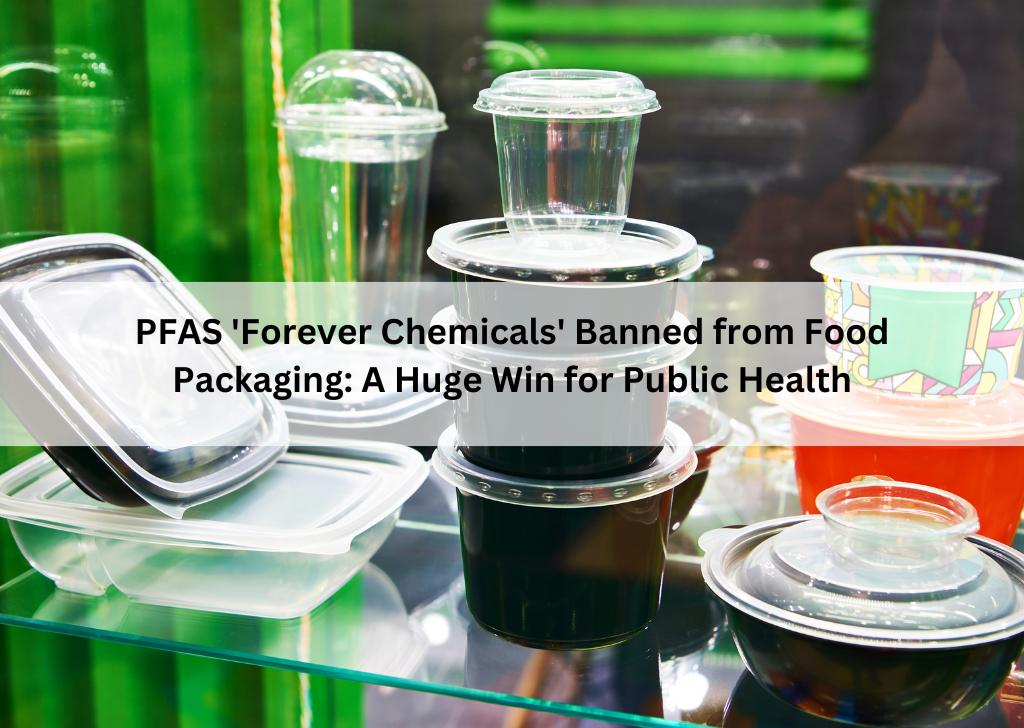
For over 60 years, per- and polyfluoroalkyl substances (PFAS) have been manufactured for their extremely useful properties. These synthetic chemicals can repel water, oil, stains and heat, making them ideal for products like non-stick cookware, stain-resistant fabrics, firefighting foams and grease-proof food packaging and service ware. Food packaging is one of the biggest uses of PFAS. These “forever chemicals” have been used in sandwich wrappers, pizza boxes, microwave popcorn bags, takeout containers, and bakery bags to prevent soaking through grease and moisture. The problem with PFAS is that they do not break down easily in the environment or the human body. In fact, PFAS persists for thousands of years! As a result, these chemicals have become ubiquitous globally, contaminating soil, air, lakes, rivers, fish and wildlife. Humans can ingest PFAS through contaminated food packaging, but also through other contaminated food and water sources. Chemicals accumulate in the body over time. Numerous studies on exposed human populations have linked higher PFAS levels to increased risks of health issues such as: After years of pressure from environmental groups, poison control centres, and the Environmental Protection Agency, the U.S. Food and Drug Administration has now banned American food manufacturers from using PFAS in any new food packaging products sold in the country. This ruling marks the completion of a 3-year voluntary phase-out process that the FDA began in 2020 when it first worked with manufacturers to remove certain PFAS used as grease-proofing agents. Benefits/Effects/Impacts: “This FDA-led effort represents a positive step forward as we continue to reevaluate chemicals authorized for use with, and in, food,” said Jim Jones, FDA deputy commissioner for human foods. “It underscores an important milestone in the protection of U.S. consumers from potentially harmful food-contact chemicals.” “This is a huge win for the public,” added Graham Peaslee, a Notre Dame physicist who studies PFAS contamination and exposure pathways. “Nobody reads the wrapper of their hamburger to see if it has PFAS or not. It’s going to be a huge win that we don’t have to worry about where it ends up.” Despite the significant progress made in phasing out PFAS from food packaging, experts emphasize that these chemicals persist ubiquitously in the environment due to decades of widespread use and disposal. Contamination of drinking water, meat, dairy, and crops remains a pressing issue, requiring remediation, filtration, and concerted efforts. Nevertheless, the recent FDA ban represents a pivotal and eagerly awaited milestone in curbing one of the primary sources of PFAS exposure for Americans. As manufacturing and usage decline, experts anticipate a gradual reduction in environmental and human exposure levels. The FDA reaffirms its commitment to ongoing evaluation of PFAS chemicals and pledges to update regulations based on the latest scientific findings, ensuring accurate risk determinations. For companies navigating the complexities of PFAS regulation, ComplianceXL offers specialized support from experienced expatriates with in-depth knowledge of PFAS. Don’t hesitate to reach out to our specialists for guidance and assistance at any time. FAQs: Q: When will PFAS be completely removed from food packaging? A: Most manufacturers have already ceased using PFAS in food packaging. However, it may take up to 18 months for existing stocks to sell through before they are eliminated from grocery shelves and restaurants. Q: Are PFAS only found in food packaging? A: No, PFAS compounds have been used in countless products and industries over the past 60+ years, including non-stick cookware, clothes, carpets, firefighting foams and more. Their widespread use has led to ubiquitous environmental contamination. Q: Are there health risks from previous PFAS exposure? A: Ongoing research shows potential links between high levels of PFAS in the body and adverse health effects like reduced immunity, increased cholesterol, changes in liver function, obesity, reduced fertility, and some cancers. Consult your doctor with any concerns. Q: What alternatives will replace PFAS? A: Manufacturers are expected to transition to other grease-resistant coatings and liners that do not contain PFAS compounds. Common alternatives include plant-based waxes and conventional polyethylene plastic liners.
Minnesota Implements Strict Regulations for PFAS and Heavy Metals in Products
The U.S. state of Minnesota has recently approved specific regulations concerning the use of PFAS (per- and polyfluoroalkyl substances) and heavy metals in several consumer products. This decision marks a proactive effort to mitigate the potential risks associated with these harmful substances. It indicates the state’s commitment to ensuring the well-being of its residents. Heavy metals and PFAS are toxic chemicals that can cause a number of adverse health effects, including developmental problems, reproductive problems, and certain types of cancer. The widespread use of these substances in everyday items such as cookware, food packaging, and textiles has attracted increasing attention. Considering the potential harm caused by these substances, Minnesota has taken a strong stance to regulate their presence in consumer products. Minnesota aims to protect its citizens from potential health hazards by restricting these substances in consumer products. As a result of the new regulations, there are strict limits on the concentration of PFAS compounds and heavy metals in consumer products. There is also a reasonable transition period provided to allow manufacturers and suppliers to adjust their production processes and sourcing strategies to comply with the new standards. To ensure compliance with the PFAS and heavy metals limits, manufacturers will be required to conduct thorough testing. Furthermore, labeling requirements will be implemented to ensure that consumers are informed about the presence of these substances in the products they purchase. The restrictions on PFAS will be implemented in phases, and will take effect on January 1, 2025, for products such as carpets, rugs, cleaning products, cookware, cosmetics, etc. In addition, from January 1, 2026, if a product contains intentionally added PFAS chemicals, the manufacturer must submit a notice to the Commissioner of Pollution Control Agency with the required information. Products containing PFAS chemicals will be prohibited in all products beginning on January 1, 2032. Compliance XL provides companies with compliance consulting services and PFAS declaration collections. Our company also assists our customers in maintaining their suppliers’ certificates and declarations in order to keep them up to date as part of their compliance data management strategy. FAQs 1. What is the threshold limit for lead and cadmium in consumer products under the new heavy metal regulation? The threshold limit for lead and cadmium in consumer products under the new heavy metal regulation is Lead ≤ 90 ppm, Cadmium ≤ 75 ppm. Get in touch with us today for more information! Contact Us
EU PFAS restriction delayed by challenging analysis
PFAS limits have been delayed until 2025 by the EU. As a result of the proposed ban, Germany, Denmark, the Netherlands, Sweden, and Norway would virtually be able to limit all PFAS. The announcement was made in February 2023. Given the long shelf lives and toxicity of some PFAS, also known as “forever chemicals,” the proposed prohibition is appropriate. It is widely recognized that some PFASs are toxic, including the recent announcement of a phase-out of PFASs made by DuPont, Corteva and Chemours, as well as a settlement from 3M for $10.3 billion. As a result, these chemicals are also widely used. This includes various CO2 reduction technologies that support other EU legislation. Other words, the debate about limiting PFASs should not be used as a method of treating the human body, since there may be no substitutes for compounds used in decarbonization. Safety is the topic of the discussion. It is likely that a comprehensive ban on PFAS would affect science-based targets (SBTs) and planned legislation as well as decarbonization technologies that are supported by these targets. PFAS are used in batteries for electric cars, heat pumps, hydrogen fuel generation and transportation, wind turbines, and other decarbonization technologies. This restriction would affect the EU Green Deal, the Repower EU plan, and the “Fit for 55 by 2030” bundle of regulations. PFAS producers and users are being lobbied by the European Chemical Industry Council (CEFIC), as the EU considers its stance on PFAS in advance of a recommendation (likely to be published in 2024) from the European Chemicals Agency (ECHA) and the European Council (EC). It will be possible to choose the level of PFAS restriction, including any specific exempted or permitted uses, by 2025. It would result in an effective date of 2026 and an 18-month transition period in the middle of 2027 that might affect manufacturers and products. ComplianceXL continues to monitor these new limits and laws. ComplianceXL can determine if you are using PFAS in your products at the moment. By identifying potential threats from harmful substances such as PFAS, you can be proactive in managing your compliance. Adding value to your business and your clients while gaining an edge over your competitors is possible with reactive policies. Get in touch with us today for more information!